

ABOUT THE PEOPLE’S SUMMIT FOR A FOSSIL FREE FUTURE
Who we are
The People’s Summit for a Fossil Free Future is the civil society counterpart to the historic First International Conference on Transitioning Away from Fossil Fuels, taking place in Santa Marta from 24-29 April 2026.
The People’s Summit will be held from the 24 to 26 of April and will serve as a critical space for self-organized civil society to unify our demands and build collective power from the ground up. It is based on a global process for deepening and widening broad movement consensus on a more comprehensive agenda for a rapid, equitable, and just energy transition, culminating in the adoption of three key papers:
the Principles
the Demands
the People’s Roadmap
These unified positions will then be delivered directly into the official process through the Assembly of the People (April 27), a formal space convened by the Colombian government to facilitate direct dialogue between civil society representatives and state delegates. While the Summit is where we forge our shared vision, the Assembly is where we ensure that it shapes the official outcomes.
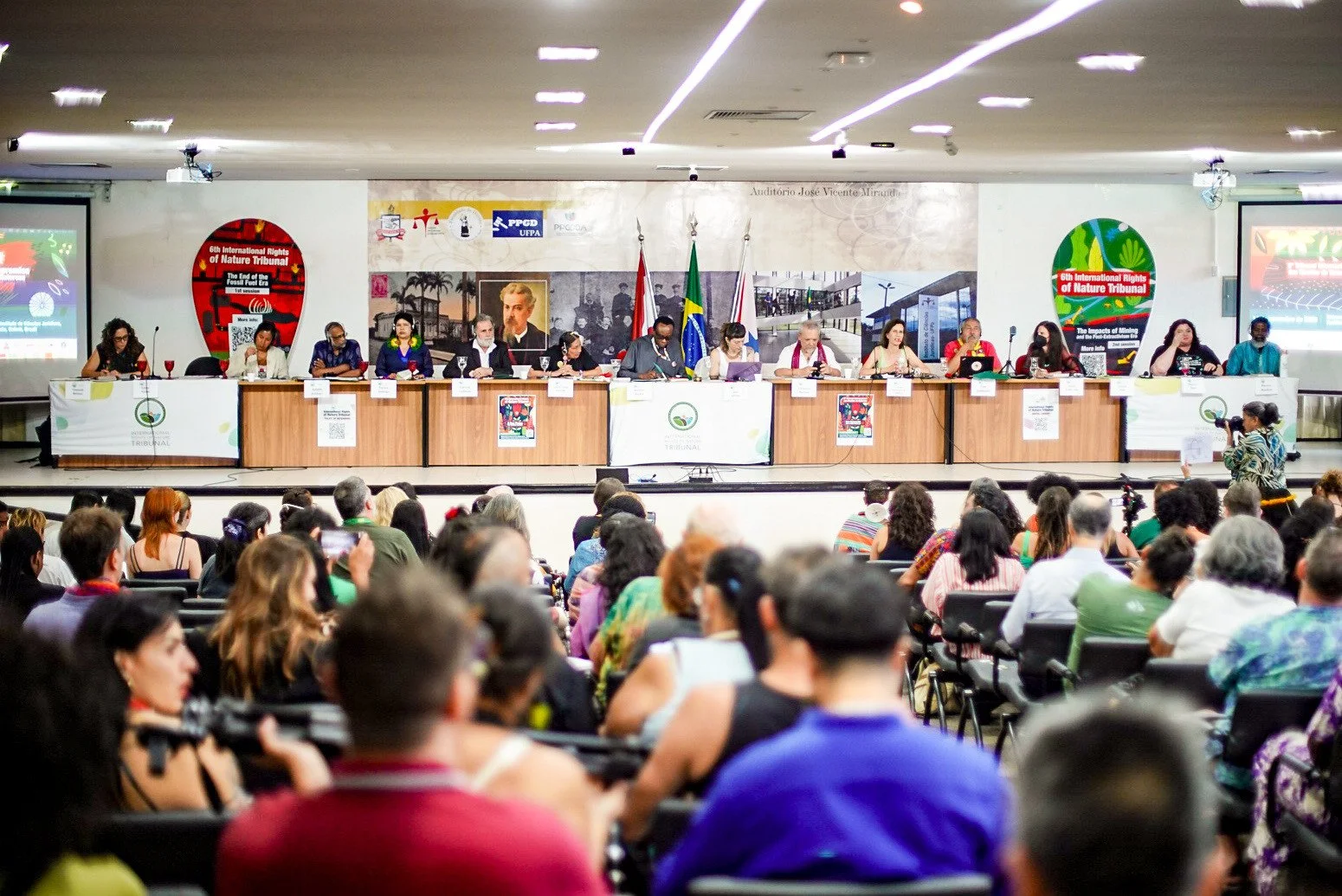
The People’s Summit for a Fossil Free Future is being coordinated by a broad coalition of over 900 organisations and networks, co-convened by El Consejo Permanente para la Transición Energética Justa, the Global Campaign to Demand Climate Justice (DCJ) and the Climate Action Network International (CAN). Working alongside local partners and international movements, this coalition is establishing a platform to amplify the voices and demands of civil society organisations, frontline organisations, Indigenous Peoples, Afro-descendant communities, Feminists, Youth, Workers, and more. While we engage with the official process through dedicated pre-meeting spaces designed to move beyond symbolic participation, the People’s Summit stands as an independent movement space reflecting the broader struggle for a just and equitable transition away from fossil fuels.
Our narrative
From Belém to Santa Marta and beyond, the global movement for climate justice is forging an arc of mobilizations to advance the call for a fossil-free future and urge more rapid and decisive actions to overcome the systemic barriers to a just transition. Afro-descendant, Indigenous Peoples, and peoples movements are demanding an end to the tyranny of fossil fuel interests, the colonial control of our resources, the ongoing crime of ecocide, and the machinery of war that sustains this extractive status quo.
As we converge on Santa Marta, this statement defines the non-negotiable principles for a just transition to a fossil free future.
-
From Belém to Santa Marta and beyond, the global movement for climate justice is forging an arc of mobilizations to advance the call for a fossil-free future and urge more rapid and decisive actions to overcome the systemic barriers to a just transition. Afro-descendant, Indigenous Peoples, and peoples movements are demanding an end to the tyranny of fossil fuel interests, the colonial control of our resources, the ongoing crime of ecocide, and the machinery of war that sustains this extractive status quo.
The First Conference on Transitioning Away from Fossil Fuels in Santa Marta, Colombia will take place from April 28-29, 2026, a critical time as communities around the world once again confront the human consequences of a volatile and violent fossil fuel system. The US-Israel attacks on Iran and the consequent escalating war in the Middle East are not only resulting in direct losses to human lives but also triggering other consequences that deepen human suffering across the globe. These include the steep rise in fossil fuel prices as the conflict sends shockwaves through the global energy market.
When energy prices surge, the impacts on communities are immediate: food and other basic commodities become much more expensive; farmers face rising fertilizer costs; food becomes more expensive to transport; factories slow or stop, the value of workers' already low wages shrinks further; families are forced to stretch household budgets further; and women’s multiple burdens become even heavier. It is a stark reminder that the fossil fuel energy system, built on extraction and scarcity, leaves people and economies extremely vulnerable to geopolitical conflict, price shocks, and other vagaries of global markets.
These moments expose a fundamental strategic truth: transitioning away from fossil fuels is not merely a matter of climate policy. For many countries and communities, it is also a question of economic stability and human well-being. It is one of the most effective ways for countries to shield their economies from volatility, reduce dangerous dependence on imported fuels, and redirect vital resources toward sustainable development, food security, energy access, and long-term economic resilience.
The Santa Marta Conference represents a historic opportunity to strengthen and step up international cooperation toward a fossil-free future and to forge a collective commitment to a transition that is scientifically non-negotiable, legally mandated, and rooted in human rights, justice, and equity.
We cannot afford to squander this moment. We must raise our voices to compel governments and other actors to rapidly dismantle systemic economic dependencies on fossil fuels. We must hold Global North nations, corporations, and financial institutions accountable for perpetuating and profiting from the climate crisis. We must demand reparations for historical and ongoing harms and justice for communities and all people who are disproportionately suffering the consequences.
We must mobilize a unified global voice to ensure that participating governments translate the objectives of the Santa Marta Conference into binding, rights-based commitments that honor historical obligations.
-
Participating governments must act with the urgency and justice required to dismantle systemic economic dependencies on fossil fuels that currently shackle many nations. For nations in the Global South, relying on fossil fuels for energy and public revenue is a trap reinforced by high debt and interest rates that make transitioning to renewables financially out of reach. This economic system is not an accident or inevitable, but a direct legacy of colonial conquest. Santa Marta must address the three pillars of economic vulnerability: ensuring durable employment that outlasts resource depletion, diversifying sovereign revenue to fund public goods without fossil-fuel reliance, and establishing decentralized energy security as the foundation for local resilience.
Dismantling fossil fuel dependence is part of the Global South’s struggle against a volatile, extractive economic order and the continuing colonial exploitation that has historically sacrificed frontline, Black, and Indigenous communities for the Global North’s prosperity.
The massive, unsustainable and unjust debts of Global South nations trap them in a cycle of fossil fuel dependence because they must export resources to service these debts. This is a trap forged by fossil fuel corporations, predatory lenders, and the governments of the Global North that forces Global South nations into chaining their economies to the extraction of oil, coal, and gas in order to survive.
Debt cancellation will enable countries to phase out fossil fuels and build diverse, resilient, and thriving economies. By eliminating the crushing burden of sovereign debt, countries can redirect essential public funds from servicing foreign loans toward building renewable energy infrastructure and funding climate adaptation. Furthermore, debt cancellation breaks the "fossil fuel trap" and lowers the risk premiums that make sustainable development projects far too expensive. Ultimately, debt cancellation is a crucial form of reparative justice, aiming to rectify historical, colonial, and ecological exploitation.
Currently, many nations are trapped in an extractive model where they export raw minerals to the Global North, leaving them economically dependent on volatile commodity markets and high-interest debt. To truly break free from fossil fuels, these countries must be supported in moving up the value chain, processing their own minerals and manufacturing clean energy technology domestically. This process creates high-quality, stable jobs and builds the essential infrastructure needed for energy sovereignty, ensuring that the transition fosters local economic development.
The global transition away from fossil fuels must be fully financed because it involves a profound economic and social restructuring. The transition requires massive capital (estimated at trillions of dollars annually) to build renewable energy infrastructure, stabilize economies dependent on fossil fuel revenue, and provide social support for those whose livelihoods will be affected. Without financing, the transition risks stalling, deepening global inequalities, and leaving millions of workers and vulnerable communities behind. The delivery of adequate, public, and non-debt creating climate finance for the Global South, a legal and moral obligation of Global North countries, must be ensured.
We do not accept the lame excuse that there are not enough funds for a global just transition. The urgently needed finance is there. They are just in the wrong hands. By ending fossil fuel handouts, making big polluters pay, taxing the super rich and dismantling the systems of militarism that divert public funds into conflict and ecological destruction, governments can raise the public money needed for a global just transition to renewables and other urgent needs from healthcare to housing.
The movement for a just transition is defined by the leadership of those who have been marginalized for generations: Indigenous Peoples, Afro-descendant communities, people of color, workers, farmers and fishers, women, youth, disabled people, colonized and occupied peoples and other marginalized communities. We demand that those who have been disproportionately harmed by the climate crisis, colonization, imperialism, and the volatility of fossil fuel dependence are not merely consulted, but are placed at the center of the decision-making process.
-
The transition away from fossil fuels requires the rapid replacement of fossil fuel infrastructure with community-owned, renewable energy systems. Unlike the extractive model, which relies on import-dependent, vulnerable, and often weaponized energy sources, a transition to renewables allows for decentralized local grids that ensure energy security and resilience. By decoupling our energy supply from the volatility of oil and gas, we move toward the potential for a regenerative economy where sustainable technology serves the public interest, fulfills the basic energy needs of the marginalized, and respects the planetary boundaries that sustain all life.
To transform supply and demand, Santa Marta must prioritize the following:
Halt the expansion of fossil fuel supply by immediately stopping all new exploration, licensing, and infrastructure development.
Redirect global financial flows from extractive projects to renewable infrastructure, recognizing that finance is the primary lever to deconstruct the current supply-demand imbalance. By defunding fossil expansion and canceling unjust and unsustainable debts, we dismantle the systemic barriers that force Global South economies to remain trapped in export-oriented extraction, thereby freeing up resources to build resilient, local energy demand and supply.
Target the systemic drivers of growth, such as the unchecked expansion of the petrochemical industry and the massive, energy-intensive demands of digital infrastructure — especially data centers enabling artificial intelligence — ensuring that energy policy prioritizes the energy access of the millions who live without it while curbing overconsumption in wealthy economies.
The Global North must fulfill its fair share of climate action, which includes the full delivery of its climate finance obligations and reparations for climate debt. Reparations are not a form of aid or an extension of predatory lending. They are a long-overdue restitution for the destruction of our planet and the exploitation of its peoples. The Global North must acknowledge this historical debt and deliver the trillions in finance, including debt cancellation, to cover loss and damage, build resilient infrastructure, and the transition to renewable energy.
The transition must be democratic and people-centered, not a process left to the volatile whims of global markets or the dictates of predatory financial mechanisms. We reject the "false solutions" and carbon-offsetting schemes that commodify our ecosystems and displace frontline communities to protect corporate profit. We demand rights-based, non-market approaches that treat energy, water, and land as common goods, centering the sovereignty of the people and our collective well-being.
Santa Marta must advance a fossil fuel phase-out that is strictly aligned with Indigenous and Just Transition principles, ensuring that as we dismantle the extractive status quo, we build a peace-based economic model that treats our planet as a shared inheritance rather than a resource to be plundered.
-
Ending the fossil fuel era is a pathway to global peace, stability, and climate justice. This means a managed, funded, and equitable phase-out governed by an international mechanism. We must move beyond the era of voluntary pledges and fragmented, market-led initiatives to legally binding obligations.
A Fossil Fuel Treaty is a critical step toward implementing the Paris Agreement and fulfilling states’ legal obligations to protect the climate, as reaffirmed by the ICJ Advisory Opinion.
The current investment and trade system often forces Global South nations to choose between honoring human rights obligations and paying for the regulatory risk of phasing out fossil fuels. We must terminate investment treaties that grant corporations the power to sue governments for climate action, as well as undertake a comprehensive overhaul of trade rules, especially WTO rules protecting intellectual property rights that inhibit the transfer of climate technologies. We must ensure that countries have the policy space to add value to their minerals and build local green industries without the threat of legal or economic retaliation.
Current trade-led approaches, such as treating subsidy reform as a technical WTO matter, are inadequate and risk imposing austerity rather than fostering development, as we’ve seen with WTO subsidy rules for farming and fishing. Reform must be integrated into a rights-based Just Transition framework that prioritizes energy sovereignty, equity, and the needs of diverse peoples in the Global South.
Strengthening international cooperation necessitates that the Global North fulfills its fair share by delivering trillions in unconditional climate finance to support Loss and Damage, resilient infrastructure, and the transition to renewable energy.
Santa Marta must champion the operationalization of a Just Transition Mechanism (JTM) as a concrete, UNFCCC-linked delivery platform. This mechanism must move beyond advisory roles to drive actual implementation, anchored in a rights-based framework and governed by a Global South-majority decision structure to ensure those most affected hold the power to shape the transition, including by having access to direct, non-debt creating, and differentiated funding.
Participate and Register
In addition to organising local actions, joining decentralised mobilisations, urging your Minister to attend the Conference, or amplifying our message online, you can participate directly in the in-person events in Santa Marta, structured as follows:
24 April: Regional meetings and self-organised events.
25 April: Separate sector meetings (Afro-Descendants, Feminists, Youth, Farmers, Social Movements, Interfaith, NGOs).
26 April: A full-day convergence of all sectors for plenaries and breakouts to finalise our collective positions and adopt our People’s Declaration before the official conference begins.

The outputs will be shared in the Assembly of the People (27 April), the government-convened space that will bring together 250 delegates to engage directly with the official process. Civil society has been allocated approximately 60 representative slots within this assembly. These seats are distributed among key constituencies (Afro-Descendants, Women, Youth, Farmers, Social Movements and NGOs) with strict criteria for gender balance and regional representation (majority from the Global South). Sectors and regions are currently meeting to choose their representatives for the Assembly.
If you wish to be register to the People’s Summit for a Fossil Free Future: please complete this form.
People’s Summit Events
The People’s Summit for a Fossil Free Future will be held from April 24–26, 2026, at the Universidad Cooperativa de Colombia in Santa Marta. This self-organized space unites civil society, Indigenous peoples, trade unions, and frontline communities to consolidate demands and build collective power ahead of the High-Level Segment. Below is a selection of media-accessible meetings as well as additional events hosted by the People’s Summit organisations.
Please note that this list is not exhaustive. For the most up-to-date, day-by-day schedule, refer to the People’s Summit website, at: https://fossilfreerising.org/events-santa-marta
April 24 - DAY 1:
Goldman Prize, Yuvelis Morales Blanco, Press conference: "Pescar sueños de paz en ríos de vida" – 08:00 – 09:00| Universidad Antonio Nariño | Organisers: Alianza Colombia Libre de Fracking
Espacio Sindical– 08:00 – 09:00 | Hotel Arhuaco Rodadero | Agenda
People’s Summit for a Fossil Free Future - REGIONAL MEETINGS- 14:00 – 18:00 | Universidad Cooperativa de Colombia & Universidad del Magdalena. Note: These regional strategy sessions are closed to media coverage. However, the university campus remains accessible for journalists seeking interviews. Spokespersons for each region will be stationed at the following specific venues:
LATAM, Caribbean, Colombia - Auditorio mayor, UCC,
Africa, Asia, Pacific, MENA - Auditorio menor
North America, Europe - AuditorioAntonio Nariño
Global Science & Policy Conference on Transitioning Away from Fossil Fuels- All Day | Universidad del Magdalena | Organisers: Universidad del Magdalena, University of Sussex, Climate Analytics, UBC, Climate Strategies, Carbon Tracker, IISD, LINGO
Conferencia Territorios Livres de Combustibles Fósiles Santa Marta - All Day | Location TBC | Organisers: FOSPA, Oil Watch
Launch: Scientific Panel on Global Energy Transition – 18:00 - 20:00 | Teatro Santa Marta, Cl. 16 #5-10 Piso 2, Comuna 2, Santa Marta
April 25 - DAY 2
People’s Summit for a Fossil Free Future — SECTORAL MEETINGS - 8:00 – 18:00 | Universidad Cooperativa de Colombia & Universidad del Magdalena.NOTE: These sectoral working sessions are closed to media coverage. However, the university campus remains open for journalists wishing to interview specific spokespeople. Representatives for each group will be located at the following venues:
Youth | Auditorio mayor
Social Movements | Auditorio menor
Afro-descendants | Salón multiple
Farmers and Fisherfolk | Salón multiple
Inter-faith | Salón multiple
Women and Gender | Biblioteca
NGO's | Hemiciclo
Espacio Sindical– 08:00 – 09:00 | Hotel Arhuaco Rodadero | Agenda
Encuentro de espiritualidades – All Day | Colegio Diocesano San José
Conference for Fossil Fuel-Free Territories — All day Final day of territorial exchange and strategy building | Location TBC
Global Science & Policy Conference — All day | Universidad del Magdalena | Organisers: Universidad del Magdalena, University of Sussex, Climate Analytics, UBC, Climate Strategies, Carbon Tracker, IISD, LINGO
Women’s Fossil Fuel Phaseout Forum —18:00–21:00 | Best Western Plus | Feminist perspectives on fossil fuel phaseout and a just transition.
April 26 - DAY 3
Encuentro autónomo y presencial de la Ruta de Incidencia de los Pueblos Indígenas - 08:00 - 17:00 | Uni de Magdalena, Auditorio Neguanje
People’s Summit for a Fossil Free Future — Official Plenary, open to media: Adoption of the People’s Declaration -15:00 – 18:00 | University De Magdalena (Tent)
Parliamentary Forum & Reception- Invemar - Institute for Marine and Coastal Research - Cl.25 #2-55, Playa Salguero, Santa Marta | Organisers: Parliamentarians for a Fossil Free Future
Baile en la Calle(Cultural mobilization celebrating community power and resistance) — 17:00–Late | Casa de la Memoria | Organisers: Maleza, Casa de la Memoria, Fossil Fuel Treaty
"Pre-Assembly" of the Peoples - 08:00 - 18:00 | Corporación Bolivariana del Norte, carrera 12 No 12- 22, Santa Marta | Organizer: Government of Colombia
April 27
People’s Assembly - 08:00 - 12:30 in University of Magdalena Auditorium, 14:00 - 18:00 in Santa Marta Theater | Organiser: Government of Colombia
Encuentro autónomo y presencial de la Ruta de Incidencia de los Pueblos Indígenas - 08:00 - 17:00 | Uni de Magdalena - Auditorio Julio Otero
Investment Partner Engagement Hub Hilton Hotel - 11:00 – 15:00 | Pozos Colorados | Organisers: Equal Right, Bridging Ventures, Wings, Fundación Avina, Amazon Conservation Team
Global Citizen High-Level Fireside Chat and Lunch Reception - 11:30 - 14:00 | Hilton Garden Inn | Contact camille.couturier@globalcitizen.org to register
La Chiva Climática (iItinerant Workshop on Solutions for Climate and Territory) - Location and time TBC | Organiser: Friedrich-Ebert-Stiftung Colombia (FESCOL)
Flotilla Reception Ceremony - Location and time TBC | Organisers: Climate Justice Flotilla, Global Sumud Colombia
Parliamentary Forum - Invemar - Institute for Marine and Coastal Research - Cl.25 #2-55, Playa Salguero, Santa Marta | Organisers: Parliamentarians for a Fossil Free Future
April 28
Health and Climate: Structural elements from the health sector for the phase-out of fossil fuels - 11:00 – 13:00 | Unimagdalena Auditorio Playa Grande | Organisers: Friends of Climate and Health, Global Climate and Health Alliance, The Lancet Countdown on Health and Climate Change
How to overcome the debt crisis and turbocharge a just transition - 09:00 – 10:30 | Sanha Hotel Plus | Organisers: Latindadd, Recourse, MENAFem, FARN, OCI, CESR, Debt for Climate, Oxfam, Eurodad
Financial Roadmaps towards a Just Phaseout and a Fossil-Free Amazon - 12:00 – 15:00 | Hotel Zuana Beach Resort & Centro de Convenciones | Organiser: RAN, BankTrack, Amazon Watch, Friends of the Earth US, ReCommon, Urgewald, Stand.Earth, Parliamentarians for a Fossil Free Future
Fossil Fuels, Militarism, and the Path to Peace: A Feminist Just Transition - 10:30 – 12:00 | Hilton Garden, Aguabahía Room | Organisers: Heinrich Böll Stiftung, Fossil Fuel Treaty, LIMPAL Colombia, PeaceBoat
April 29
High Level Segment including Closing Press Conference - 17:00–19:00 | El Estelar
Un Paso Adelante: the Afterparty - 21:00 - late | Casa Kapikua, km 20 vía Santa Marta - Ciénaga | Organiser: Fossil Fuel Treaty Initiative